INDUSTRIAL AUTOMATION
.jpg)
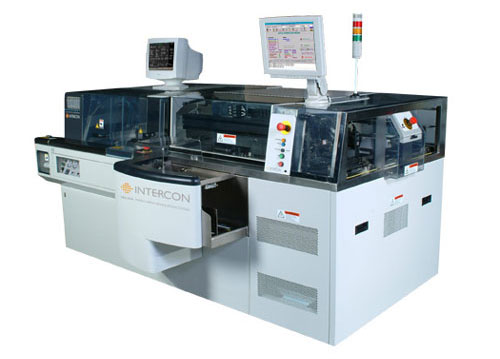
Back End Chip Processing
High
Speed Mechanism
SMP Tech, Inc. was tasked to update an existing product that offered a better user interface, increased the throughput all while reducing the overall unit cost. We met this challenge by applying basic industrial design and human factors along with engineering analysis and design principles from the ground up. The frame was completely redesigned to provide a stable structure for higher operating speeds. It also incorporated several features that previously required several separate parts. In addition, input from assemblers, service technicians, and customer service were integrated into the design stage, which resulted in a system that meets the up front technical requirements, as well as the downstream service and maintenance personnel. The end result was a system where throughput increased from 6,000 to over 12,000 units per hour, material cost of the unit was cut in half, assembly is measured in hours, not days, and service calls are now dealt with by modular replacements instead of complete system reworks.
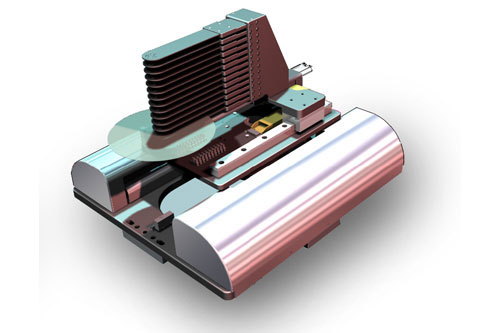
SMP Tech, Inc. designed, documented and built two front end robotic systems used to load 200 mm wafers into the vacuum chamber in a microwave asher.

High Capacity Wafer Processing
SMP Tech, Inc. designed, documented and built three front end
robotic systems used to load 300 mm wafers into the vacuum chamber
in a microwave asher. The robot was specially designed to move
25 wafers at one time. The entire robotic system was only thirty-six
inches deep.
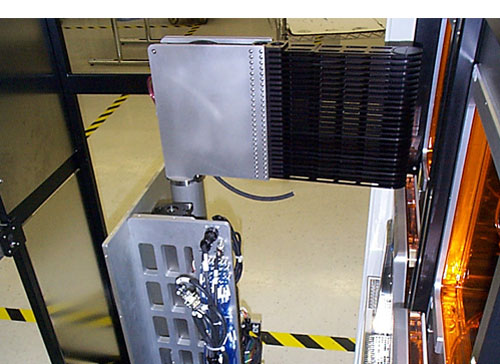
High Speed Wafer Processing
SMP Tech, Inc. designed this end effector for the front end robot shown above. The end effector applied vacuum to all 25 wafers at the same time.
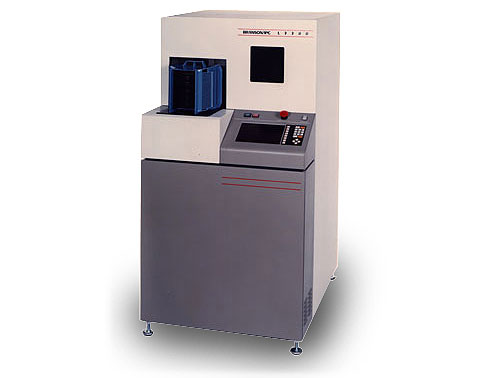
High Energy Plasma Cleaning Instrument
This machine is an example of packaging for a technically advanced product. Our responsibilities included design, documentation and the building of the production systems.
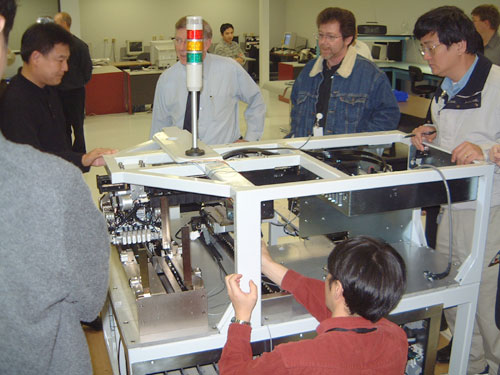
Intercon had developed a high speed Singulation System mechanism with a throughput of 6,000 UPH. In order for SMP to increase the speed of the system, SMP designed a new frame structure. We measured the acceleration forces (greater than 6 G) and the exciting frequencies to establish the design criteria. SMP used COSMOS Design Star FEA software, along with the test data, to guide our frame activities. Operational Results: Intercon was able to increase their throughput from 6,000 UPH (units per hour) to over 15,000 UPH.